

IPL Skin Rejuvenation
IPL Skin Rejuvenation is an advanced light-based treatment used to target visible sun damage, pigmentation, redness and uneven skin tone.
At Sibu Skin and Beauty, we don’t treat “rejuvenation” as one concern. IPL can be used differently depending on what we are trying to change — whether that is accumulated sun damage, areas of excess pigment, visible vessels or the uneven colour that can contribute to skin looking older or less healthy.
This is why every IPL treatment begins with an assessment of your skin, the specific target we are treating and a test patch before treatment.
What is IPL Skin Rejuvenation?
IPL stands for Intense Pulsed Light.
Unlike a laser, which emits a specific wavelength of light, IPL delivers a broad spectrum of light. Filters allow us to select the wavelengths appropriate for the structures we want to target within the skin.
The treatment works through a principle called selective photothermolysis. Different structures within the skin absorb different wavelengths of light. These light-absorbing targets are called chromophores.
For IPL Skin Rejuvenation, two of the most important chromophores are:
Melanin — the pigment we target when treating suitable brown pigmentation, freckles and sun damage.
Haemoglobin — found within blood vessels and targeted when treating visible vessels and certain types of facial redness.
The treatment settings are therefore selected according to what we are treating, your skin type and how your skin responds.
IPL for Healthy Ageing & Sun Damage
One of the most useful roles for IPL in Healthy Ageing is treating photodamage — the visible changes created by cumulative exposure to ultraviolet light over time.
Healthy ageing is not only about collagen or skin laxity. Uneven pigmentation, sun spots, redness and changes in skin clarity can contribute significantly to the way ageing becomes visible.
IPL allows us to target some of these colour-related changes rather than trying to treat every sign of ageing with a collagen-stimulating treatment.
IPL may be useful when Healthy Ageing concerns include:
Sun spots and accumulated photodamage
Freckles and uneven pigmentation
Facial redness
Visible superficial vessels
Uneven or blotchy skin tone
Loss of overall skin clarity
If your primary concern is laxity, loss of firmness or deeper structural ageing, IPL may not be the treatment doing the heavy lifting. HIFU, RF Skin Tightening, Skin Needling or another treatment may have a more appropriate role.
Often, Healthy Ageing involves addressing different layers and different concerns over time, rather than expecting one technology to do everything.
IPL for Pigmentation
When we use IPL for pigmentation, the primary target is melanin.
Melanin absorbs selected wavelengths of light delivered by the IPL device. That light energy is converted into heat within the targeted pigment.
Following treatment, suitable superficial pigmentation may temporarily become darker or more noticeable. Over the following days, the treated pigment can gradually move towards the surface and shed or fade.
IPL may be appropriate for concerns such as:
Sun-induced pigmentation
Freckles
Some superficial brown spots
Uneven pigmentation associated with photodamage
Importantly, not all pigmentation should be treated with IPL.
Pigmentation has different causes and can sit at different depths within the skin. Some pigment conditions require a different treatment approach, and inappropriate light treatment can potentially worsen pigmentation.
That is why we assess the type of pigmentation, not simply whether a brown mark is visible.
IPL for Redness & Visible Vessels
When treating vascular concerns, the target changes.
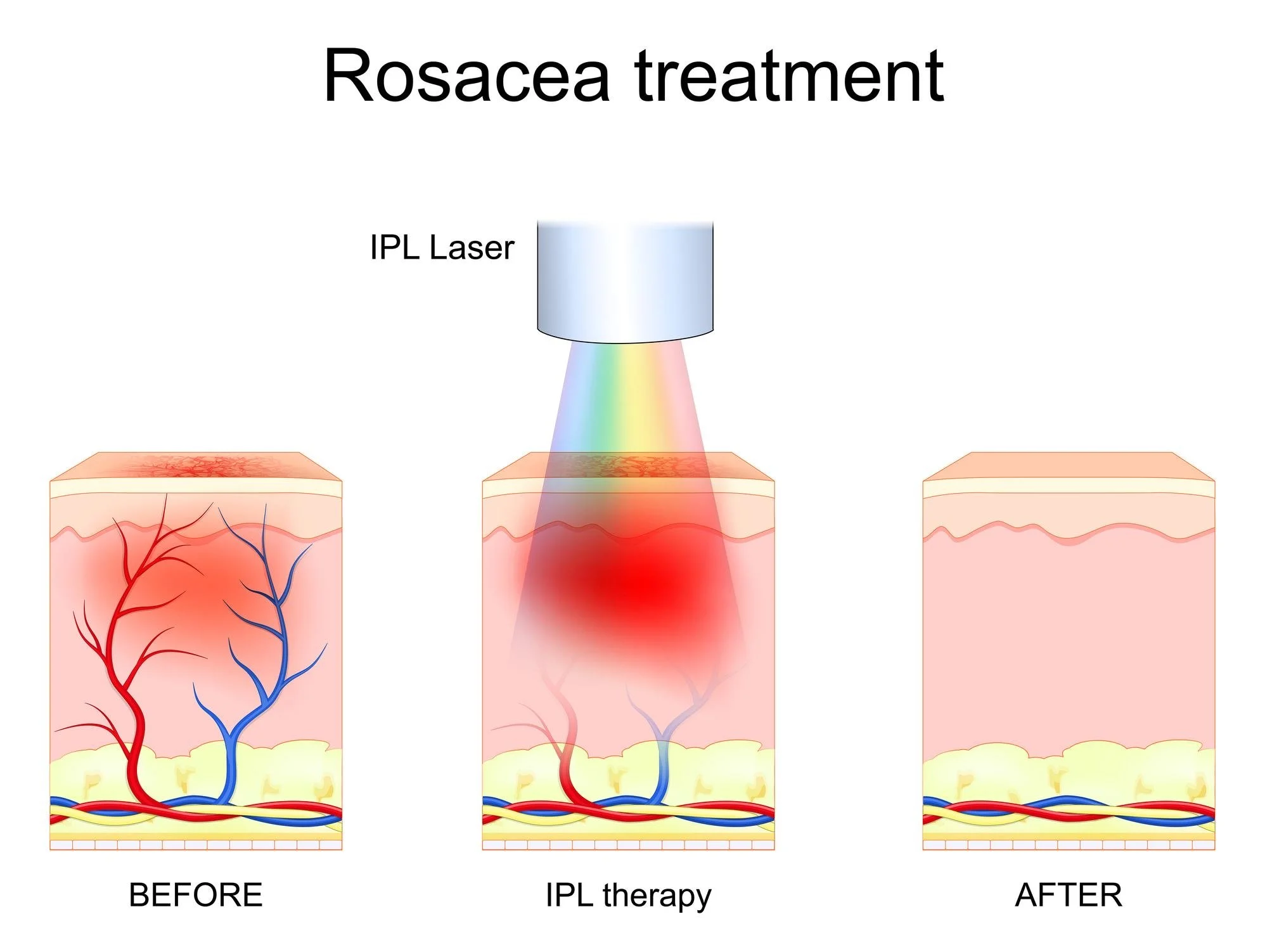
Instead of targeting melanin, selected IPL wavelengths are absorbed by haemoglobin within the blood vessel.
The absorbed light is converted into heat, creating a controlled thermal effect within the targeted vessel. The treated vessel can then gradually be cleared by the body.
Depending on the individual skin and vascular concern, IPL may be used for:
Diffuse facial redness
Visible superficial capillaries
Areas of vascular discolouration
Redness associated with photodamage
Again, not every form of redness has the same cause. Reactive or sensitised skin, inflammatory skin conditions and visible vessels are not interchangeable concerns.
We assess what is creating the redness before deciding whether IPL is appropriate.
IPL for Uneven Skin Tone
Sometimes there is not one dominant spot or vessel that bothers a client.
Instead, the skin may have a combination of scattered pigmentation, background redness and sun damage that creates an uneven or blotchy appearance.
Where appropriate, IPL can address more than one chromophore within a treatment programme. Reducing contrasting areas of brown pigment and vascular redness can help the complexion appear clearer and more even.
This is where the term Skin Rejuvenation becomes useful: the objective is not to remove normal skin colour, but to selectively address visible colour changes that are contributing to an uneven complexion.
IPL for Uneven Skin Tone
Sometimes there is not one dominant spot or vessel that bothers a client.
Instead, the skin may have a combination of scattered pigmentation, background redness and sun damage that creates an uneven or blotchy appearance.
Where appropriate, IPL can address more than one chromophore within a treatment programme. Reducing contrasting areas of brown pigment and vascular redness can help the complexion appear clearer and more even.
This is where the term Skin Rejuvenation becomes useful: the objective is not to remove normal skin colour, but to selectively address visible colour changes that are contributing to an uneven complexion.
IPL at Sibu Skin and Beauty
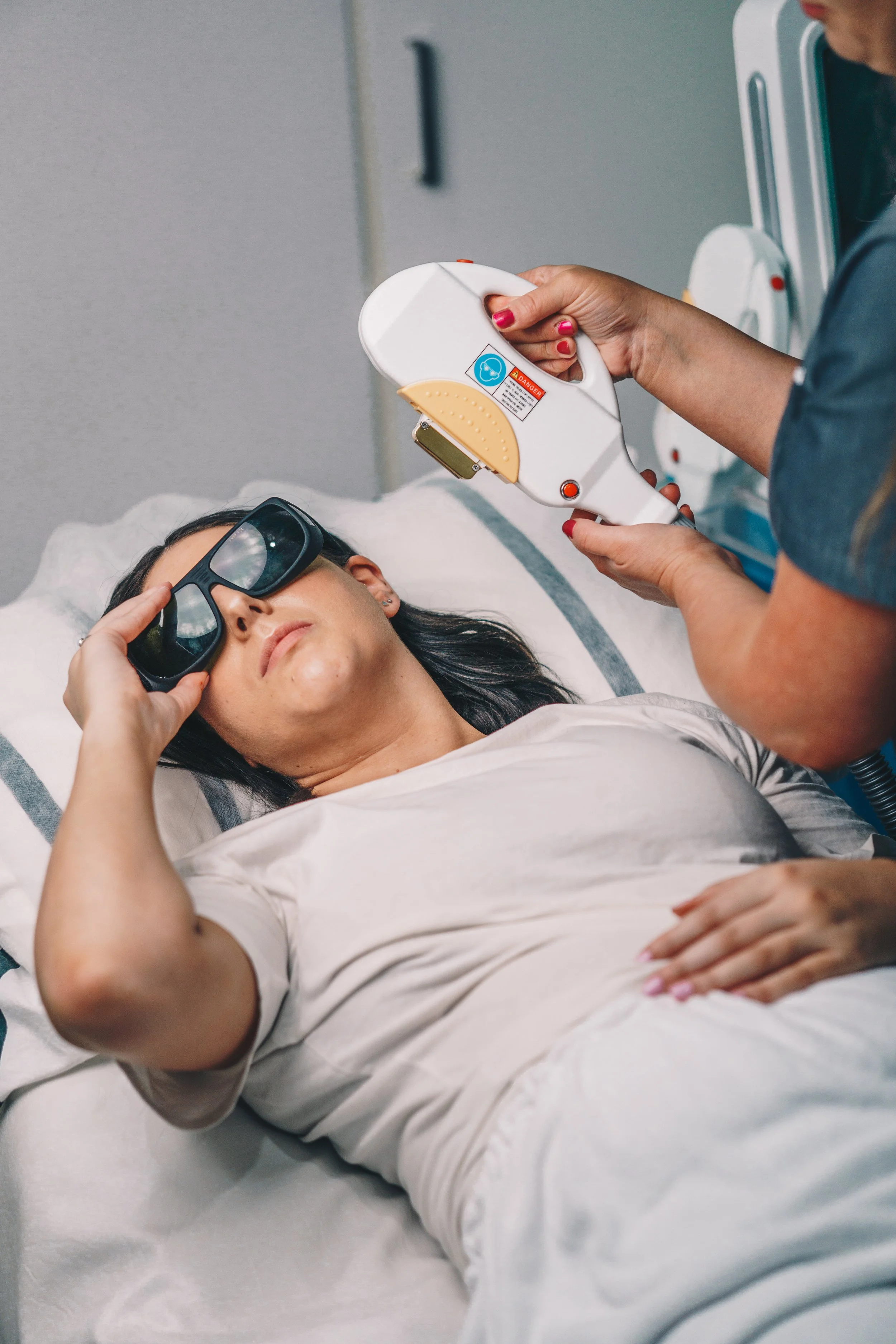
Every IPL Skin Rejuvenation treatment begins with a professional consultation.
We assess:
Your skin type
The concern you want treated
Whether the target appears suitable for IPL
Relevant medical and treatment history
Medications and skincare that may affect treatment
Recent sun exposure and tanning
Previous reactions to light-based treatments
A test patch is required before IPL treatment.
This gives us an opportunity to assess your skin’s response before proceeding with a full treatment and forms part of selecting appropriate treatment parameters.
Your IPL treatment is then planned according to your individual skin and the target we are treating.
Results and Recovery
Your skin response depends partly on what has been targeted.
After Pigmentation Treatment
Suitable pigmented areas may initially appear darker following IPL. This is an expected response in many pigment treatments.
The treated pigment can then gradually move towards the surface and fade or shed over the following days.
After Vascular Treatment
Redness and warmth can occur following treatment. Depending on the vessel and treatment response, vascular changes may reduce progressively rather than disappearing immediately.
After Skin Rejuvenation
When treating broader photodamage or uneven skin tone, improvement usually develops progressively as treated pigment and vascular changes resolve.
Temporary redness, warmth or sensitivity may occur following IPL.
Downtime varies according to your skin, treatment area, settings and the concern being treated.
How Many Treatments Will I Need?
There is no single IPL course that is appropriate for every client.
The number of treatments depends on:
What we are treating
The extent and depth of the concern
Your skin type
The treatment area
How your skin responds
Your treatment goals
Some clients may see a meaningful change following an individual treatment, while accumulated pigmentation, vascular concerns or photodamage may require a course.
We assess progress as we go rather than automatically applying the same treatment schedule to everyone.
Treatment Areas
IPL Skin Rejuvenation can be used on suitable areas affected by pigmentation, redness and photodamage, including:
Face
Neck
Décolletage
Other suitable areas following assessment
Your treatment areas and suitability will be confirmed during consultation.
IPL or Another Treatment?
IPL has a specific role.
If the main concern is brown pigmentation or sun damage, IPL may be appropriate when the pigment is suitable for light-based treatment.
If the main concern is visible vessels or certain types of redness, IPL may be used to target haemoglobin within those vessels.
If the main concern is skin laxity or loss of firmness, RF Skin Tightening or HIFU may be more appropriate.
If the main concern is texture, scarring or collagen remodelling within the skin, Skin Needling may be more appropriate.
And if several concerns are present, your treatment plan may involve different technologies at different stages.
You do not need to work this out yourself before you come in.
-
Contraindications & Cautions – IPL Skin Rejuvenation
IPL is not suitable for every client, skin type or skin condition.
A consultation and test patch are required before treatment.
Treatment may need to be postponed or may not be appropriate depending on factors including recent tanning or significant sun exposure, photosensitivity, certain medications, active infection or skin conditions within the treatment area, pregnancy, and other medical or treatment-related contraindications.
Please provide your therapist with an accurate medical history, current medications, supplements and skincare products during your consultation.
Your individual suitability will be assessed before treatment.
Memberships
For clients working on longer-term skin health and multiple concerns, IPL may form one part of a broader treatment plan where appropriate.
Our Skin Memberships are designed to support consistent professional skin care and allow your treatment plan to evolve as your skin changes.
Frequently asked Questions
-
Yes.
A consultation and test patch are required before your first IPL Skin Rejuvenation treatment. This allows us to assess your skin, determine whether IPL is appropriate for the concern and observe your skin’s response before proceeding.
-
No.
IPL uses a broad spectrum of light, whereas a laser produces a more specific wavelength of light.
Both technologies can use light energy to target structures within the skin, but they are not the same technology.
-
Yes — when the pigmentation is suitable for IPL.
IPL can be particularly useful for sun-induced pigmentation, freckles and some superficial brown pigmentation.
Not every pigmentation condition should be treated with IPL, which is why assessment is important.
-
IPL can target haemoglobin within suitable visible blood vessels and may be used for certain vascular and redness concerns.
However, redness can have different causes, so we first need to determine what is creating the redness and whether IPL is appropriate.
-
That is not its primary role.
IPL Skin Rejuvenation is primarily used for concerns such as pigmentation, photodamage, redness, visible vessels and uneven skin tone.
If skin laxity or loss of firmness is your main concern, a collagen- or tissue-focused treatment such as RF Skin Tightening or HIFU may be more appropriate.
-
No.
Suitable pigmented areas may actually become darker immediately following treatment before gradually fading or shedding.
The response varies according to the pigment being treated and your individual skin.
-
Downtime is generally limited, but your skin response will depend on what has been treated and the treatment parameters used.
Temporary warmth, redness and sensitivity can occur, while treated pigmentation may temporarily darken before gradually fading or shedding.
If minimising downtime is particularly important to you, Dermalogica Pro Restore can be added to your treatment. Pro Restore is a professional recovery concentrate designed to support skin recovery following advanced treatments and help reduce downtime.
Your therapist can advise whether adding Pro Restore is appropriate for your skin and IPL treatment.
-
Yes, where clinically appropriate.
IPL may form one part of a broader treatment plan alongside treatments addressing skin texture, hydration, collagen, firmness or other concerns.
The timing and combination of treatments should be planned rather than simply adding treatments together.
Is IPL Right for Your Skin?
You do not need to decide whether your pigmentation, redness or signs of ageing require IPL before you book.
We will assess what is actually happening in your skin and determine whether IPL is an appropriate treatment for the concern.
Because IPL requires assessment and a test patch, your first step is an IPL Skin Consultation.